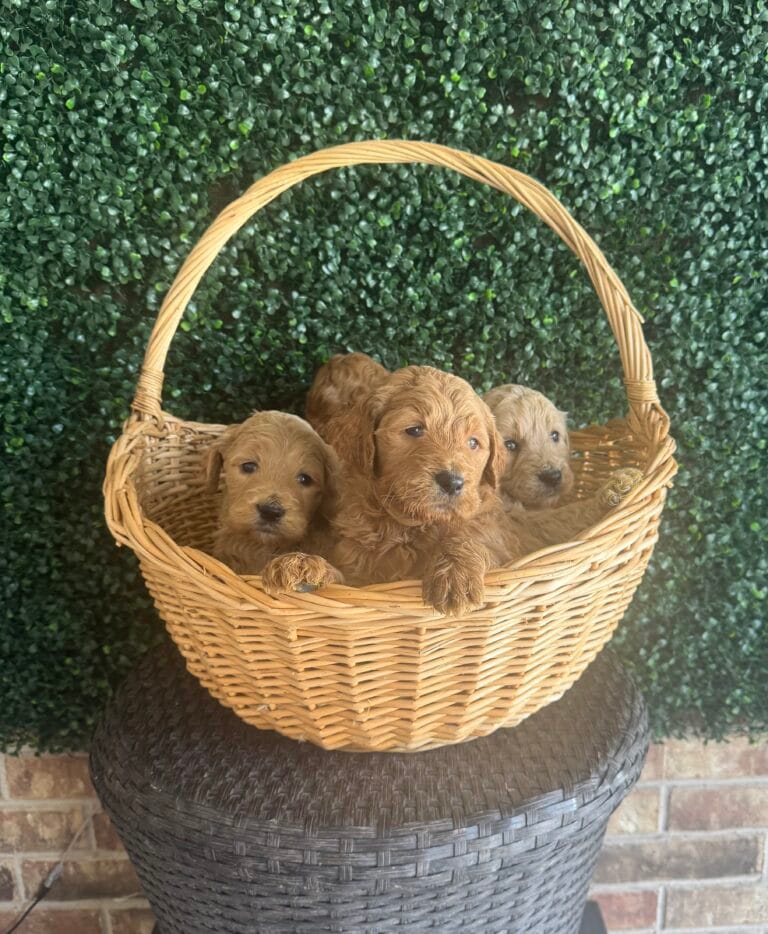

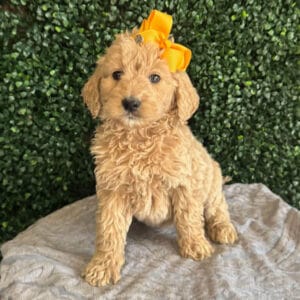
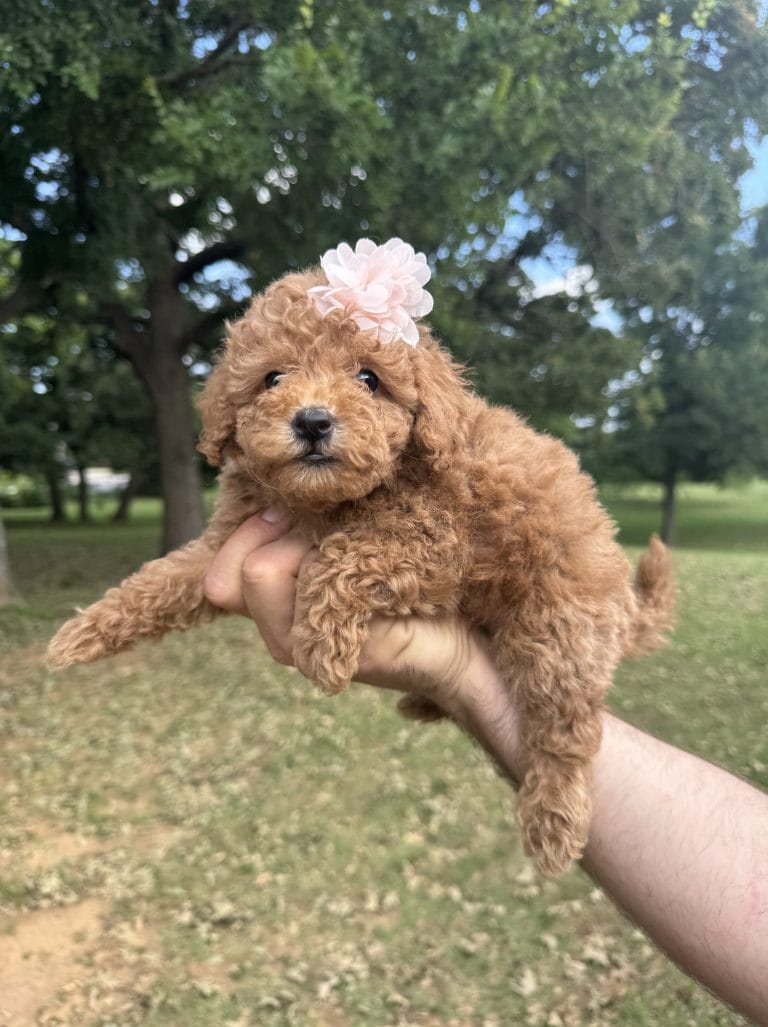
If you have ever found yourself scrolling through endless photos of adorable Goldendoodles, you have probably noticed one thing: no two are exactly alike. One might look like a walking teddy bear with tight curls, while another flaunts long, shaggy waves that flow in the wind. We know how confusing it can be to navigate the genetics of this hybrid breed, especially when you are trying to decide which puppy is the perfect fit for your family.
We have compiled everything you need to know about goldendoodle coat colors and textures into one comprehensive guide. Forget the complex scientific lectures; we are here to break it down simply, accurately, and with the kind of detail that helps you become an expert in minutes.
What are the Different Types of Goldendoodle Coats?
When we talk about the “coat,” we are usually referring to the texture and the presence of “furnishings” (that bushy beard and eyebrow look). Generally, Goldendoodles fall into three distinct coat categories.
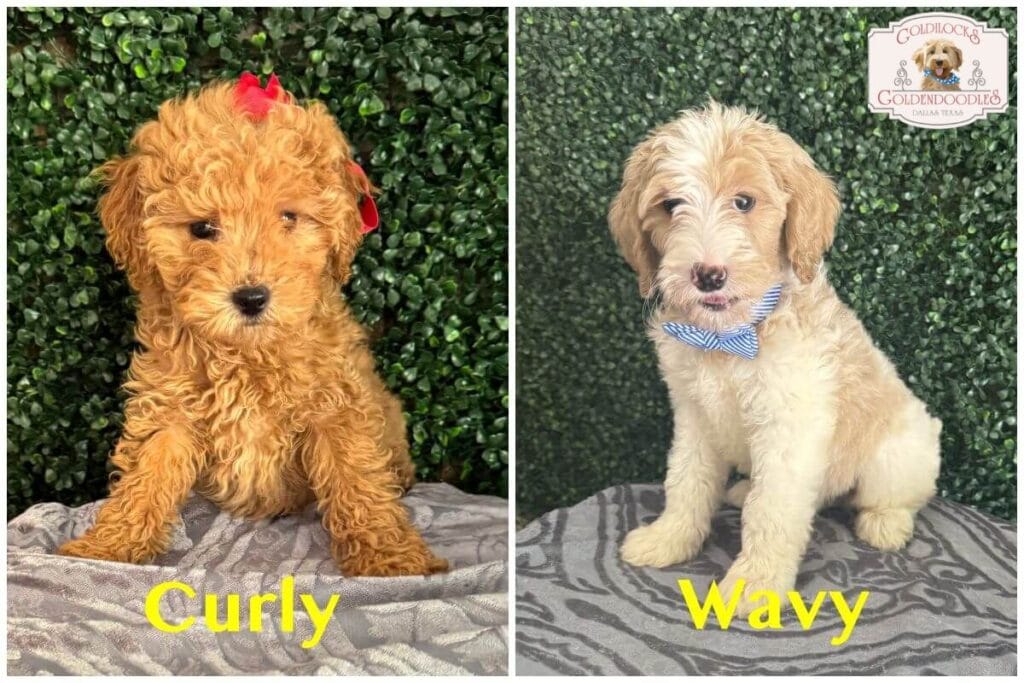
1. The Curly Coat (Wool Coat)
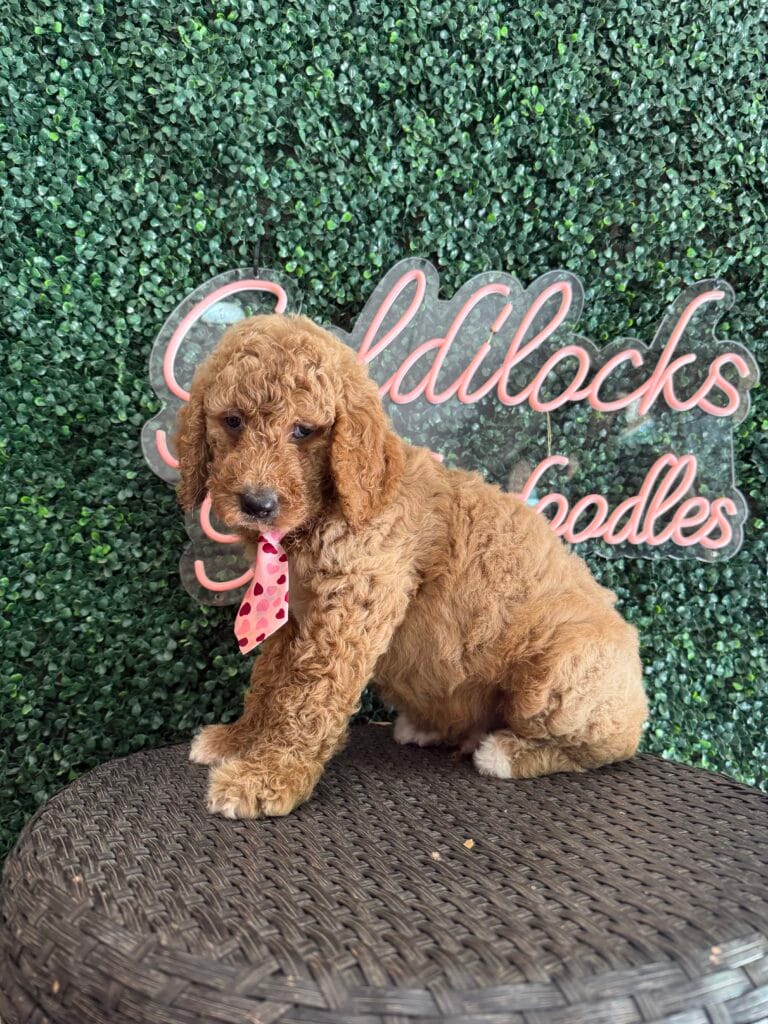
Think of a Poodle, and you have got the right idea. This coat is made up of tight, distinct curls that feel thick and dense—often compared to high-quality wool.
- The Look: Classic “Teddy Bear” appearance.
- The Feel: Dense, springy, and soft.
- Shedding: This is the most allergy-friendly option. If you need a dog that keeps your black leggings hair-free, this is the one.
- Genetics: Typically found in F1B generations or dogs with two “curl” genes (KRT71).
2. The Goldendoodle Wavy Coat (Fleece Coat)
This is the “shaggy chic” look that many prospective owners dream of. A goldendoodle wavy coat is the happy medium between the Poodle’s curl and the Golden Retriever’s straight fur.
- The Look: Gentle waves that flow down the body, giving the dog a relaxed, beachy vibe.
- The Feel: Silky and light, often described as “fleece.”
- Shedding: Usually low-shedding, though not always as “non-shedding” as the curly variety. It catches dander well but might leave a stray hair or two.
3. The Flat Coat Goldendoodle (Improper Coat)
Occasionally, genetics throw a curveball. A flat coat goldendoodle essentially looks like a Golden Retriever with a slightly different build. These dogs lack the “furnishings” gene (RSPO2), meaning they do not have the signature beard or bushy eyebrows.
- The Look: Smooth face, shorter hair on the legs, and a body coat that lies flat.
- The Feel: Sleek and smooth.
- Shedding: These dogs will shed. If you are looking for a hypoallergenic dog, we usually recommend avoiding the flat coat. However, if you love the Golden Retriever look but want a dog with a bit more Poodle intelligence, this is a hidden gem.
The Spectrum of Goldendoodle Coat Colors
Goldendoodles are like the chameleons of the dog world—they come in a stunning array of colors. While Golden Retrievers are limited to shades of gold, the Poodle heritage brings a massive palette of colors to the mix.
The Classics: Apricot, Cream, and Red
- Apricot: The most common and iconic color. It is a warm, sun-kissed shade that can range from a pale peach to a rich toast.
- Cream: Often mistaken for white, cream Goldendoodles have a soft, off-white hue. It is elegant, though we admit it attracts mud like a magnet!
- Red: A showstopper. These dogs have a deep, mahogany coat that turns heads. Keep in mind that the “fading gene” is common in Poodles, so a vibrant red puppy might soften to a lighter apricot as they age.
The Darks: Black and Chocolate
- Black: A solid black Goldendoodle is surprisingly sleek. Their coats often resemble crushed velvet.
- Chocolate: A rich brown color. Like the reds, chocolates often “clear” or fade over time into a silvery-beige color known as “Café au Lait.”
The Patterns: Parti, Phantom, and Abstract
- Parti: This isn’t a color but a pattern. A “Parti” Goldendoodle is at least 50% white with patches of another color. It’s a fun, spotted look that is unique to every dog.
- Phantom: Think of the markings on a Doberman or Rottweiler. A Phantom Goldendoodle has a solid base color (usually black or chocolate) with specific tan markings above the eyes, on the chest, and on the legs.
- Abstract (Mismarks): Mostly solid color with small splashes of white, usually on the chest or paws (often called “tuxedo” markings).
What Is the Rarest Color for a Goldendoodle?
If you are looking for a unicorn, look for Merle.
Merle is a genetic pattern that creates a mottled, marbled effect on the coat—often a mix of blue, gray, black, and white. It is stunning and undeniably rare.
- Note: We always advise caution here. Breeding two merle dogs together can cause serious health issues (blindness/deafness), so this color requires an ethical, knowledgeable breeder.
- Honorable Mention: A true, non-fading Silver or Grey is also exceptionally rare, as it requires the dog to be born black and slowly fade over 2 years.
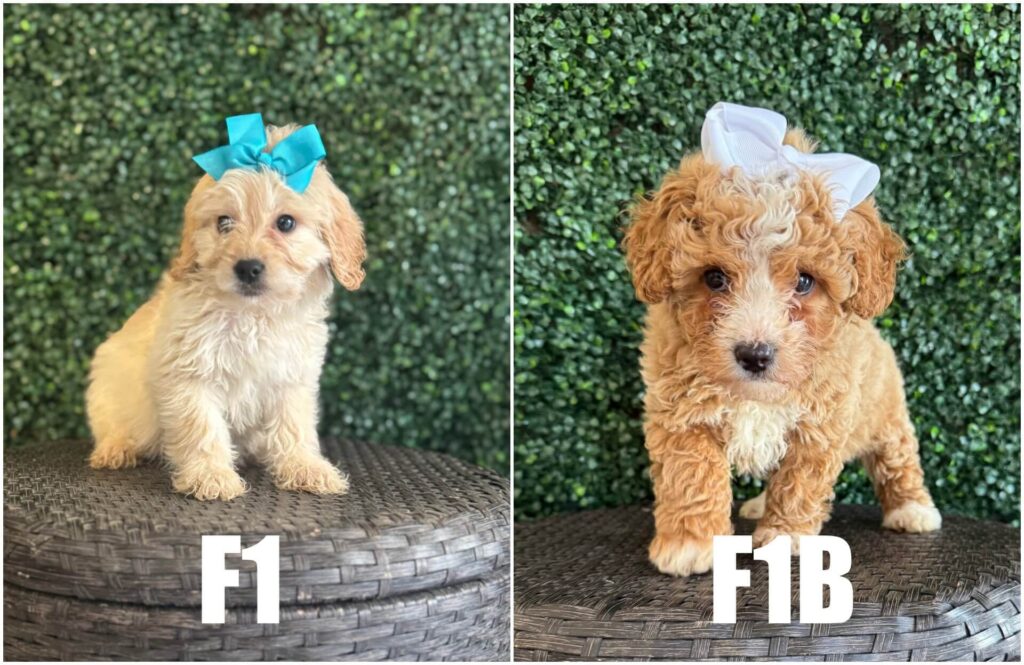
F1 vs F1B: What’s Better?
This is the question we get asked most often. The answer depends entirely on your lifestyle and your tolerance for lint rollers.
|
Feature |
F1 (First Generation) |
F1B (First Generation Backcross) |
|
Parentage |
50% Golden Retriever x 50% Poodle |
F1 Goldendoodle x Poodle (75% Poodle) |
|
Coat Type |
Usually Wavy (Fleece). Unpredictable. |
Mostly Curly or Wavy. More consistent. |
|
Shedding |
Low to Moderate. |
Minimal to Non-Shedding. |
|
Best For… |
Families who want the “Golden” temperament and don’t mind mild shedding. |
Severe allergy sufferers who need a hypoallergenic guarantee. |
So, what’s better?
If you have severe allergies, the F1B is the better choice. The higher percentage of Poodle genetics increases the likelihood of a tight, non-shedding coat.
However, if you prefer the loose, shaggy look and the slightly stockier build of the Retriever, and you don’t mind vacuuming occasionally, the F1 is a fantastic, classic option.
What Kind of Fur Does a Goldendoodle Have?
This is where the terminology gets tricky. Does a Goldendoodle have fur or hair?
Technically, most Goldendoodles have hair, not fur.
Here is the difference:
- Fur (Double Coat): Grows to a certain length and sheds out (think Huskies or Golden Retrievers). It has an insulating undercoat.
- Hair (Single Coat): Grows continuously like human hair and falls out much less frequently. This is what Poodles (and most Goldendoodles) have.
The Exception:
Remember the flat coat goldendoodle we mentioned earlier? They often retain the double coat of the Golden Retriever. This means they shed seasonally and have “fur.” But the vast majority of wavy and curly Doodles possess a single layer of hair that requires regular haircuts rather than de-shedding treatments.
Final Thoughts
Choosing a Goldendoodle is exciting, but it is about more than just picking a color. Whether you fall in love with a rusty red F1 with a wavy coat or a sleek black F1B with tight curls, you are getting a dog known for its heart, not just its hair.
We hope this guide clears up the confusion. By understanding the genetics behind the goldendoodle coat colors and textures, you can pick the puppy that isn’t just beautiful, but fits perfectly into your life.
Share the Post: